Why Preventive Dentistry Is the Best Gift You Can Give Your Child's Smile
Nobody thinks of a dental cleaning as a gift. But spend enough time in a practice like VCare Family Dental, and you start to see it differently.
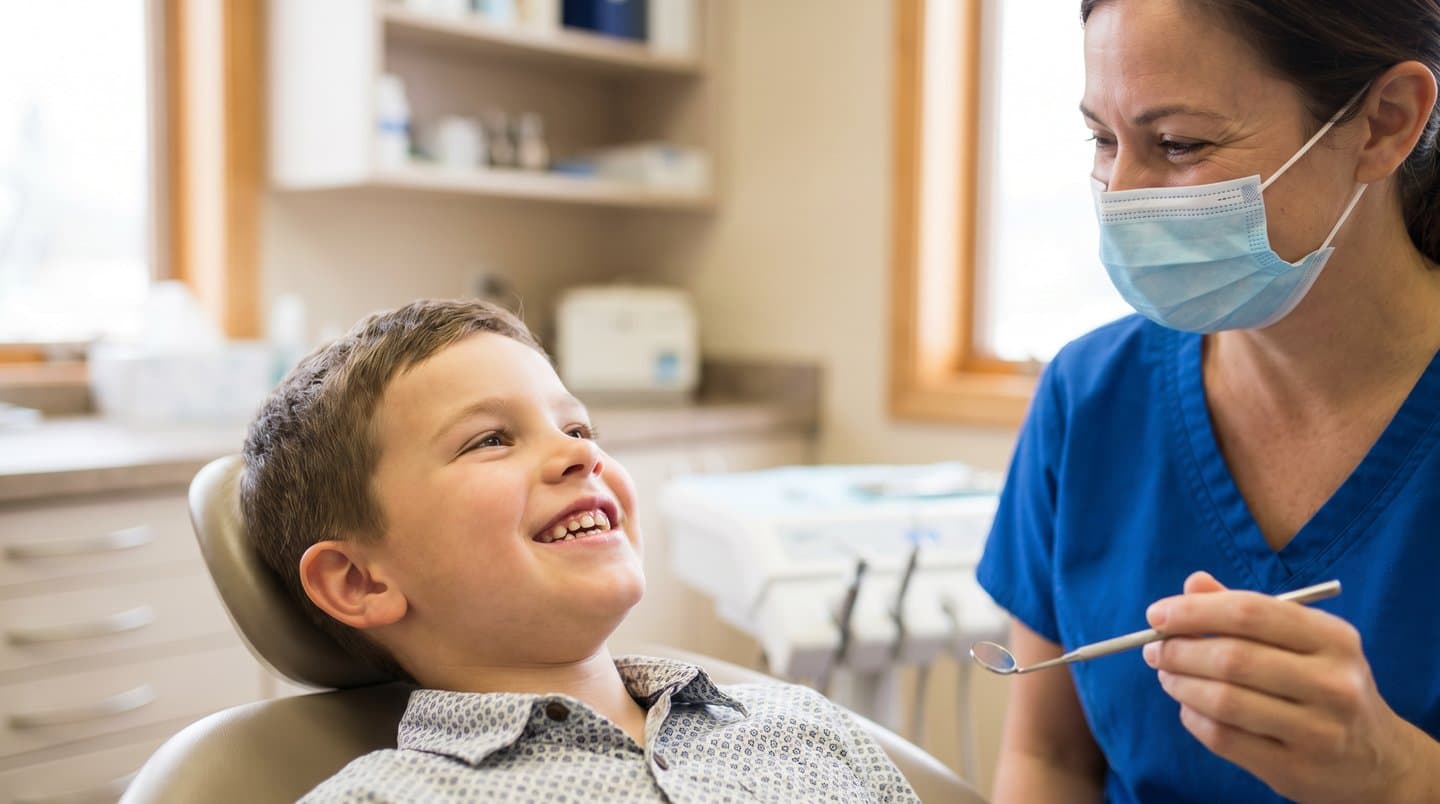
You see the seven-year-old who's never had a cavity — not because she's lucky, but because her parents started bringing her in at age one and built the habits early. You see the twelve-year-old who sits in the chair without a flicker of anxiety because the dentist's office has never been a scary place — just a familiar one. And then you see the adult patient, on the other side of the waiting room, who admits they haven't been to a dentist in a decade because they've been terrified ever since a bad experience as a child.
The difference between those outcomes is almost never about genetics or luck. It's almost always about early care, consistent habits, and the experience children have in the dental chair when they're young enough for it to shape their relationship with dental health for life.
At VCare Family Dental, Dr. Kaur and our team have built our children's dentistry approach around this understanding. Here's what preventive dental care looks like from your child's first tooth to their teenage years — and what you can do at home to make it count.
Start Earlier Than You Think
The most common misconception parents have about children's dentistry is that it starts when the "real" teeth come in. It doesn't.
The American Academy of Pediatric Dentistry recommends a first dental visit by age one, or within six months of the first tooth appearing. For most children, that first tooth arrives somewhere between four and seven months of age.
That first visit isn't about drilling or filling anything. It's about introduction — to the environment, the team, the chair, the lights. It's about giving us a chance to check that early development is on track, and giving you as a parent a chance to ask every question you have about feeding habits, teething, thumb-sucking, and how to care for those tiny first teeth.
It's also, critically, about making the dentist's office a normal part of your child's world before they're old enough to be nervous about it. Children who start at age one don't have a scary "first dental visit" at age five. They just have visits — comfortable, familiar, unremarkable.
That familiarity is worth more than most parents realize.
What Happens at Each Stage
Preventive care looks different depending on your child's age, and we tailor every visit accordingly.
Ages 0–2: The foundation stage
At this age, visits are brief and gentle. We're checking that teeth are erupting normally, looking for any early signs of decay (yes, even baby teeth can get cavities), and coaching parents on home care — how to clean an infant's gums before teeth appear, how to transition to a soft toothbrush, what toothpaste to use and how much, and how feeding habits affect dental health.
We'll also talk about common concerns at this stage: bottle use at bedtime, pacifier habits, and what normal teething looks like versus what warrants a call.
Ages 3–5: Building the routine
As your toddler grows into a preschooler, dental visits become more interactive. We introduce professional cleanings — a gentle polish that removes plaque and soft deposits that home brushing misses. Fluoride treatments start around this age, applied as a simple varnish that takes about a minute and dramatically strengthens enamel against decay.
We start to assess how the bite is developing and whether the primary teeth are holding proper spacing for the permanent teeth forming beneath them. If we see anything worth watching, we'll tell you — early — so you're never caught off guard.
Ages 6–10: The sealant years
This is one of the most important windows in childhood dental care, and it's one that many families miss.
Around age six, the first permanent molars come in. These are the large back teeth that will be with your child for the rest of their life — and they are the most cavity-prone teeth in the mouth. The deep grooves on their chewing surfaces trap food and bacteria in ways that even thorough brushing can't fully address.
Dental sealants solve this problem elegantly. A thin, protective coating is painted onto the chewing surfaces of the molars, sealing those grooves and dramatically reducing the risk of decay. The procedure takes a few minutes per tooth, involves no drilling, and causes no discomfort whatsoever. Sealants can last several years, and studies consistently show they reduce cavity rates in molars by over 80%.
If your child is in this age range and hasn't had sealants discussed, it's worth asking about at your next visit.
Ages 11–14: Monitoring and preparing
The preteen years bring a mix of permanent and primary teeth, shifting bite dynamics, and — for many children — the beginning of orthodontic conversations. Dr. Kaur assesses jaw development and tooth alignment at every visit, and will let you know if early intervention would benefit your child's long-term outcome.
This is also the age where home care habits start to slip without the right support. Teenagers get busier, more independent, and sometimes less consistent. We'll work with your child directly to keep them engaged in their own oral health — not just compliant, but genuinely invested.
Handling Dental Anxiety in Children
Dental anxiety is one of the most common reasons families delay care — and it's one of the things we take most seriously at VCare Family Dental.
Children develop anxiety in different ways. Some pick it up from anxious parents (we say this gently, because it's very common and completely unintentional). Some have had a difficult experience at a previous practice. Some are simply temperamentally cautious about new environments and new people.
Whatever the source, our approach is the same: patience, transparency, and control.
We explain everything we're doing in age-appropriate terms. We let children see and touch instruments before they're used. We move at the child's pace, not the schedule's pace. We never force a child into the chair or restrain them to get through an appointment — that approach creates exactly the kind of fear that follows people into adulthood.
For children with genuine, significant anxiety, we offer nitrous oxide sedation — laughing gas — which is safe, gentle, and wears off within minutes of the mask being removed. Many parents are surprised by how dramatically it changes the experience for a child who has previously been distressed at the dentist.
We'll always discuss whether it's appropriate and answer every question you have before suggesting it.
A Note for Our Spanish-Speaking Families
VCare Family Dental serves Tracy's diverse community, and a significant part of that community speaks Spanish at home. We want every parent to be able to ask questions, understand answers, and feel fully comfortable — not just roughly understood. Hablamos español, and we're proud to offer care that genuinely reflects the community we're part of.
The Habits That Make the Biggest Difference at Home
Preventive care at the practice works best when it's supported at home. A few things that matter most:
Brush twice, every day, with fluoride toothpaste. A pea-sized amount for children over three. Make it non-negotiable — the consistency is what builds the habit.
Floss before the bedtime brush. Once your child has two teeth touching, flossing matters. Most childhood cavities form between teeth where the brush simply cannot reach.
Water over juice. Even 100% fruit juice is high in sugar and contributes to decay. Fluoridated tap water is the best thing your child can drink between meals.
Limit grazing. It's not just what children eat — it's how often. Every time a child eats or drinks something sugary or starchy, their teeth are exposed to acid for about 20 minutes. Three meals and two snacks give teeth recovery time. Constant snacking throughout the day doesn't.
Come Meet the Team
If you're looking for a dental home for your children in Tracy — whether they're infants, school-age, or teenagers — we'd love to meet your family. Dr. Kaur and the VCare team genuinely enjoy working with kids, and it shows.
Call or text us at (209) 699-6000 or visit us at 3101 N. Tracy Blvd, Tracy, CA 95376. You can also book an appointment online at vcarefamilydental.com.